Understanding the wastewater treatment process is essential for civil engineers working in environmental engineering, public health engineering, infrastructure planning and urban development. Wastewater treatment ensures that sewage and industrial effluents are treated before being discharged into rivers, lakes or reused for gardening, flushing or construction activities. This guide explains each treatment stage—primary, secondary and tertiary—along with plant components, sludge treatment and modern treatment technologies used in India.
1. What Is Wastewater?
Wastewater is any water whose quality has been negatively affected by human activity.
It includes:
- Domestic sewage
- Kitchen waste
- Bathing water
- Toilet discharge
- Laundry water
- Industrial effluents
- Stormwater runoff
Untreated wastewater can contaminate groundwater, spread diseases and damage ecosystems.
2. Why Wastewater Treatment Is Important
Civil engineers must ensure wastewater is treated to:
- Protect public health
- Prevent waterborne diseases
- Reduce pollution of rivers and lakes
- Enable water reuse in non-potable applications
- Comply with government discharge standards (CPCB norms)
- Achieve sustainable urban development
3. Overview of a Wastewater Treatment Plant (STP)
Below are generic but accurate visuals showing STP process flow diagrams, tanks and aeration systems:

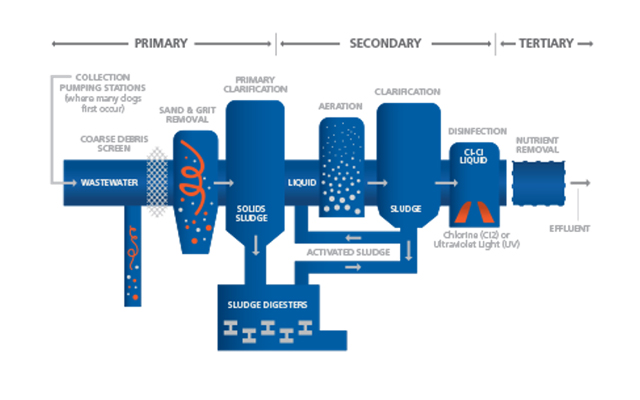
A sewage treatment plant typically includes:
- Screening
- Grit removal
- Primary clarifier
- Aeration tank
- Secondary clarifier
- Sludge treatment
- Disinfection
- Final discharge
4. Primary Treatment (Physical Treatment)
Primary treatment removes large solids and floating materials.
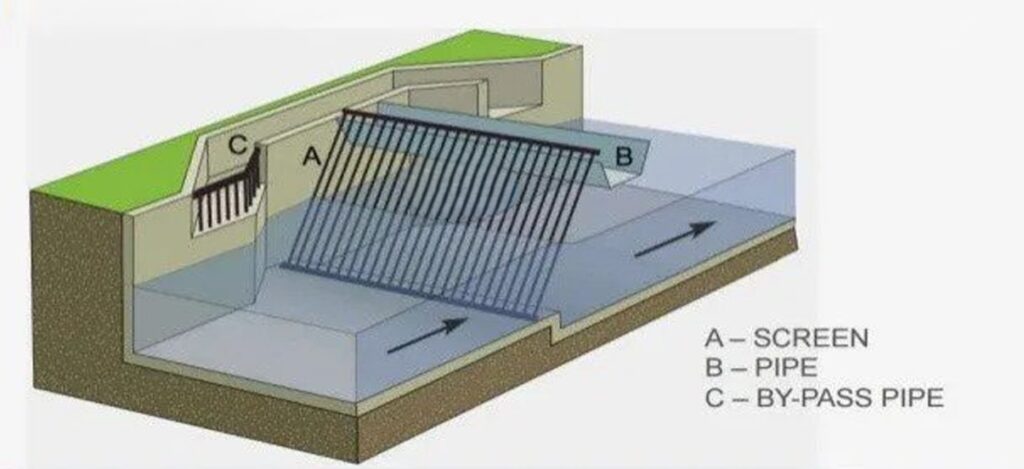
4.1 Screening
Removes:
- Plastics
- Cloth
- Paper
- Bottles
- Leaves
Tools: bar screens, perforated screens.
4.2 Grit Removal
Removes sand, gravel and other heavy inorganic matter.
Purpose:
- Protect pumps from abrasion
- Prevent deposition in tanks
4.3 Primary Sedimentation
In a large circular or rectangular tank, solids settle at the bottom.
Output:
- Primary sludge
- Clarified water (goes to secondary treatment)
5. Secondary Treatment (Biological Treatment)
This stage removes dissolved organic matter using microorganisms.
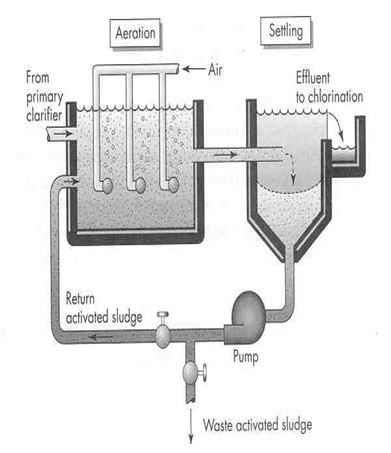

5.1 Activated Sludge Process (Most common)
Wastewater is mixed with air and microbes in an aeration tank.
Steps:
- Aeration (oxygen supply through diffusers/blowers)
- Microbial degradation of organic matter
- Settling in secondary clarifier
- Return activated sludge (RAS) recycled
- Waste activated sludge (WAS) removed
5.2 Trickling Filter
Biofilm grows on stones/plastic media; wastewater trickles over it.
5.3 Rotating Biological Contactor (RBC)
Rotating disks support biofilm growth and degrade organic matter.
5.4 Sequencing Batch Reactor (SBR)
A modern, batch-based biological treatment system used in urban STPs.
Cycle:
- Fill → React → Settle → Decant → Idle
SBR is compact, automation-friendly, and produces high-quality effluent.
6. Tertiary Treatment (Advanced Treatment)
Tertiary treatment improves water quality for reuse.


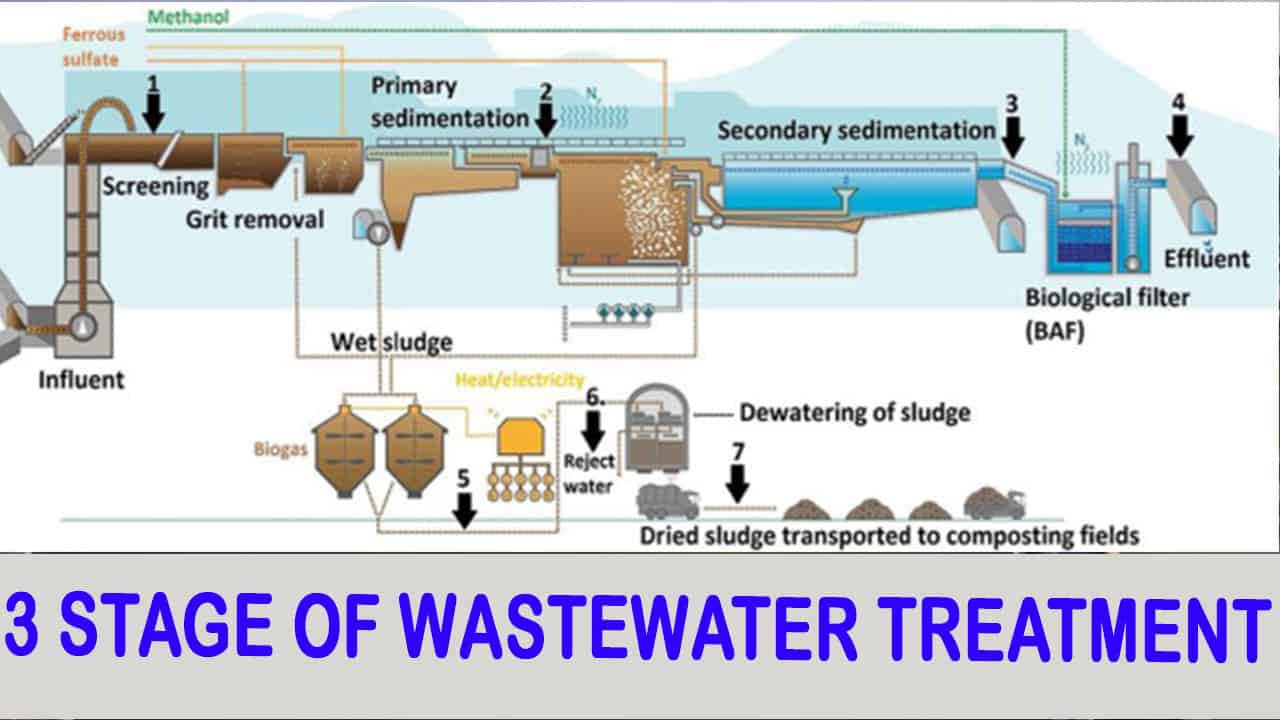
Options include:
6.1 Filtration
Sand filter / activated carbon filter.
6.2 Disinfection
Chlorination or UV treatment to kill pathogens.
6.3 Nutrient Removal
Removes nitrogen & phosphorus.
6.4 Membrane Filtration
Used in advanced STPs (MBR technology).
Water becomes suitable for:
- Gardening
- Flushing
- Cooling towers
- Construction use
7. Sludge Treatment and Disposal
Sludge is the solid waste collected from primary and secondary treatment.
Processes include:
7.1 Thickening
Separates water from sludge.
7.2 Digestion
Biological stabilization (aerobic or anaerobic).
7.3 Dewatering
Using:
- Belt press
- Centrifuge
- Filter press
7.4 Drying Beds
Common in India.
7.5 Safe Disposal / Reuse
As manure or soil conditioner if treated properly.
8. Wastewater Treatment Process Flow Summary
| Stage | Purpose | Methods |
|---|---|---|
| Primary | Remove physical solids | Screening, grit removal, sedimentation |
| Secondary | Remove dissolved organic matter | ASP, SBR, RBC, trickling filter |
| Tertiary | Remove pathogens, nutrients | Filtration, UV, chlorination |
| Sludge | Treat collected solids | Thickening, digestion, drying |
9. Modern Wastewater Treatment Technologies
9.1 MBR (Membrane Bio-Reactor)
Combines biological treatment + membrane filtration.
Produces very high-quality water.
9.2 MBBR (Moving Bed Biofilm Reactor)
Microorganisms grow on plastic carriers.
9.3 UASB (Upflow Anaerobic Sludge Blanket)
Used mainly in industrial wastewater.
9.4 Zero Liquid Discharge (ZLD)
100% recycling—used in industries.
10. Common Problems in Wastewater Treatment Plants
- Excess foaming in aeration tanks
- Sludge bulking
- High BOD/COD in effluent
- Poor settling in clarifier
- Mechanical failures
- Overloading
- Lack of skilled operators
Civil engineers must supervise and troubleshoot these issues.
11. Indian Standards and Regulations
Wastewater quality must meet:
- CPCB discharge norms
- IS 3025 (testing methods)
- MoEF guidelines
- Environmental Protection Act 1986
Conclusion
The wastewater treatment process plays a crucial role in protecting the environment, supporting urban sanitation and ensuring public health. Civil engineers must understand screening, sedimentation, aeration, clarification, disinfection and sludge treatment to design, operate and supervise sewage treatment plants effectively. With increasing urbanization and water scarcity, efficient wastewater treatment and reuse are essential for sustainable development.
Recommended Resources
CPCB Guidelines for STP
https://cpcb.nic.in
NPTEL – Wastewater Treatment Engineering
https://nptel.ac.in
EPA Wastewater Basics
https://www.epa.gov
WHO Water Sanitation Resources
https://www.who.int