Understanding solid waste management is essential for civil engineers involved in urban planning, municipal engineering, sanitation systems and environmental sustainability. With India generating thousands of tonnes of municipal solid waste daily, improper disposal leads to pollution, groundwater contamination, vector-borne diseases and severe ecological damage. This guide explains the types of solid waste, methods of waste collection, segregation, processing, composting, recycling, waste-to-energy conversion and landfill design—all critical components of modern MSW systems.
1. What Is Solid Waste?
Solid waste refers to discarded materials that are no longer useful.
It can be generated from:
- Households
- Commercial buildings
- Industries
- Agriculture
- Hospitals
- Construction sites
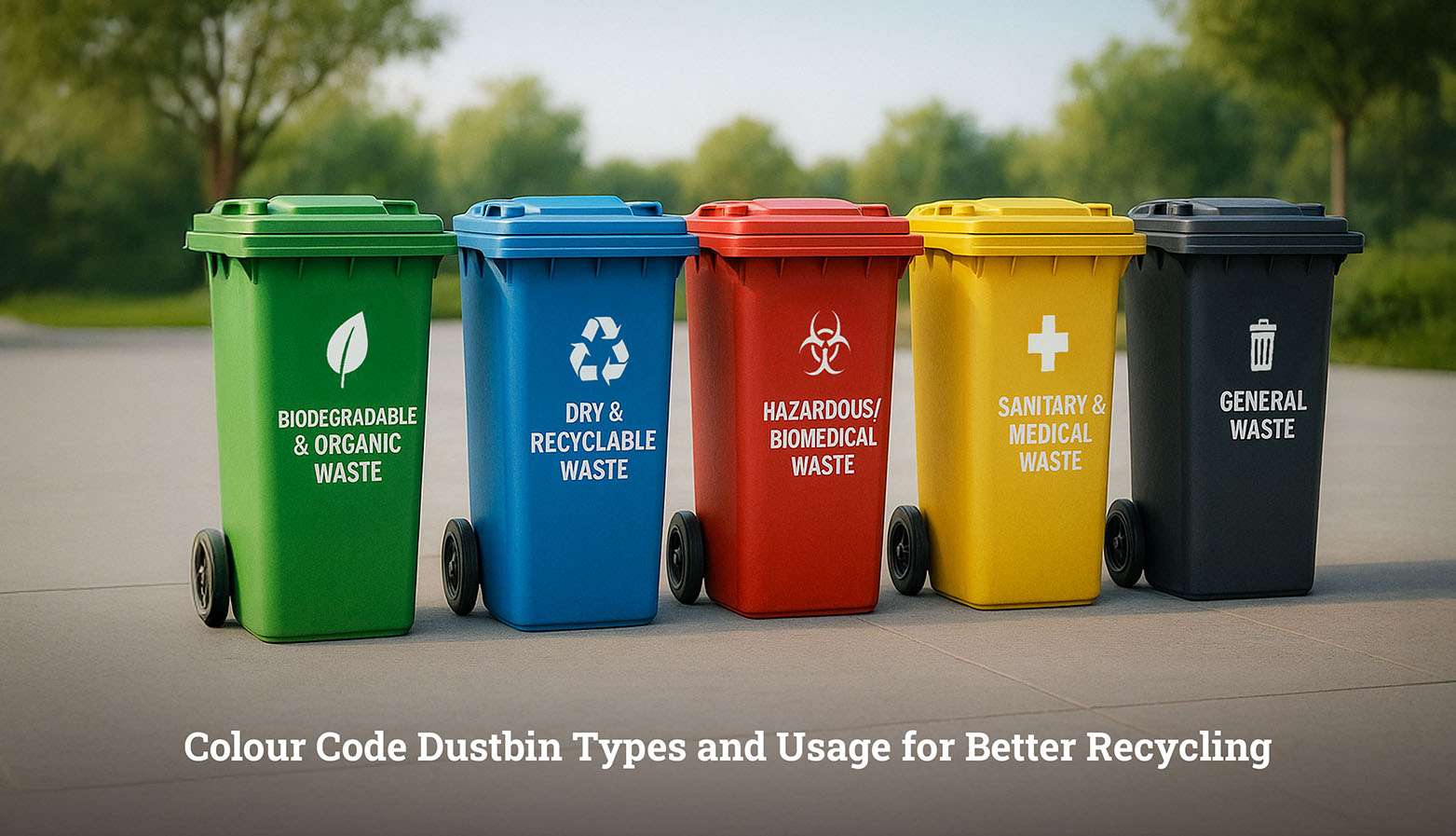
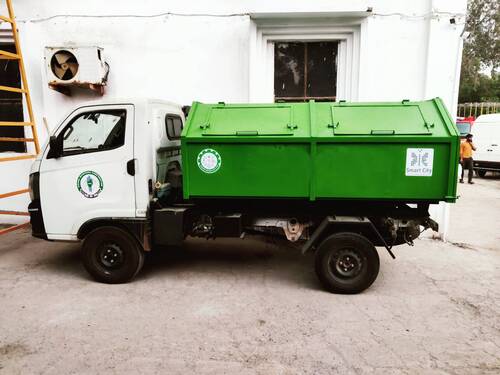
Below are generic reference images representing municipal solid waste, segregation bins and collection operations:

2. Types of Solid Waste
| Category | Examples |
|---|---|
| Organic/Biodegradable | Food waste, garden waste |
| Recyclable | Paper, plastic, metals, glass |
| Inert | Dust, construction debris |
| Hazardous | Batteries, chemicals, paints |
| Biomedical | Hospital waste |
| E-waste | Electronics, wires, chips |
Civil engineers must plan MSW systems based on waste composition in the region.
3. Solid Waste Generation in India
Urban India generates over 160,000+ tonnes/day of MSW (Municipal Solid Waste).
Per capita waste generation: 0.4–0.6 kg/person/day in cities.
Environmental challenges:
- Mixed waste without segregation
- Overflowing landfills
- Uncontrolled burning
- Leachate polluting groundwater
- Methane emissions
4. Solid Waste Management Process (Complete Flow)
Below are general-purpose illustrations of the MSW process flow:

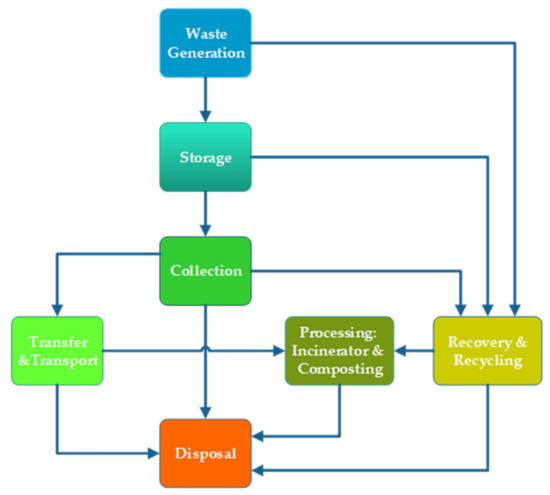
The MSW process includes:
- Waste generation
- Segregation at source
- Storage
- Collection
- Transportation
- Processing / Treatment
- Resource recovery
- Final disposal (landfill)
5. Waste Segregation (Critical Step)
Segregation into:
- Wet waste (organic)
- Dry waste (recyclables)
- Hazardous waste
Benefits:
- Reduces landfill load
- Improves recycling efficiency
- Enhances composting quality
- Reduces environmental pollution
Color-coded bins:
- Green – Organic
- Blue – Dry waste
- Red – Hazardous
6. Waste Collection Systems
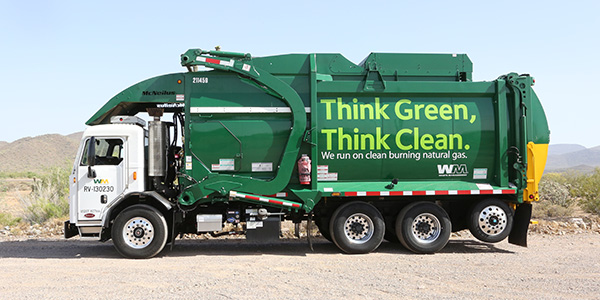
Door-to-door collection
Most effective method for urban areas.
Community bins
Used where door-to-door collection is inadequate.
Smart bins with sensors
Used in modern smart cities.
Batch vs continuous collection
Depends on density and municipal planning.
7. Waste Transportation
Waste is moved from local bins to processing centers using:
- Compactor trucks
- Tipper trucks
- Closed-body vehicles
Routing should minimize:
- Travel distance
- Fuel consumption
- Collection time
Civil engineers use GIS-based optimization to plan waste routes.
8. Waste Processing Techniques
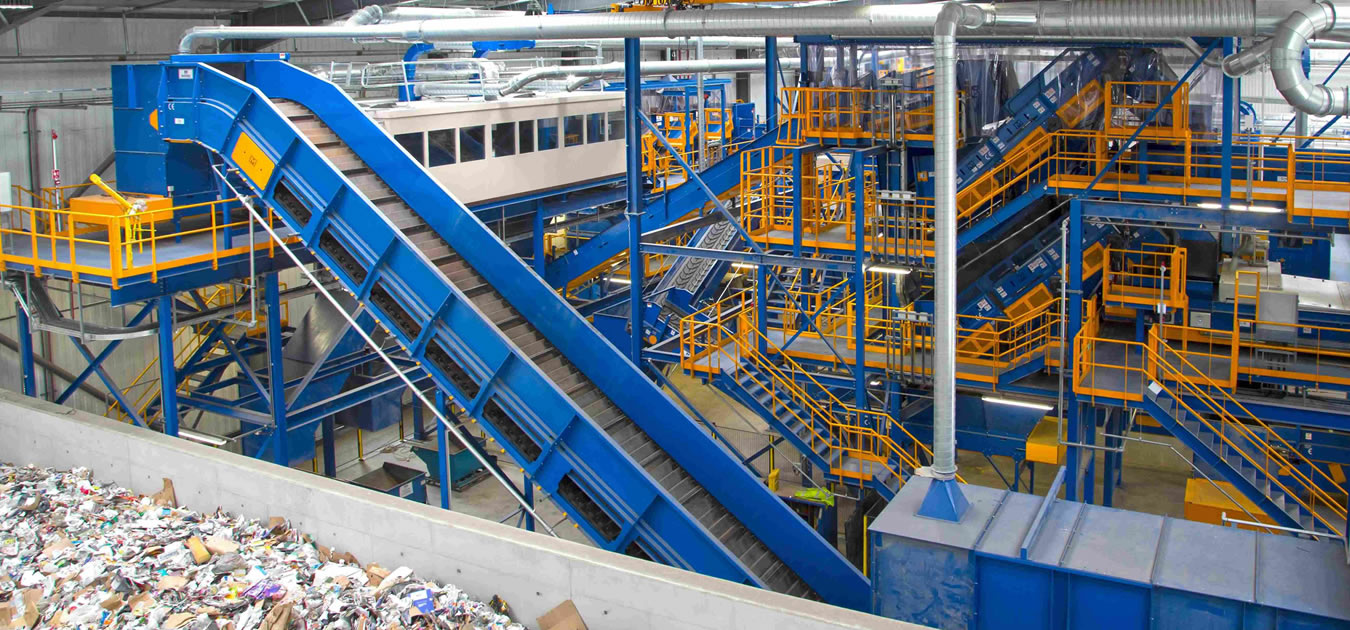
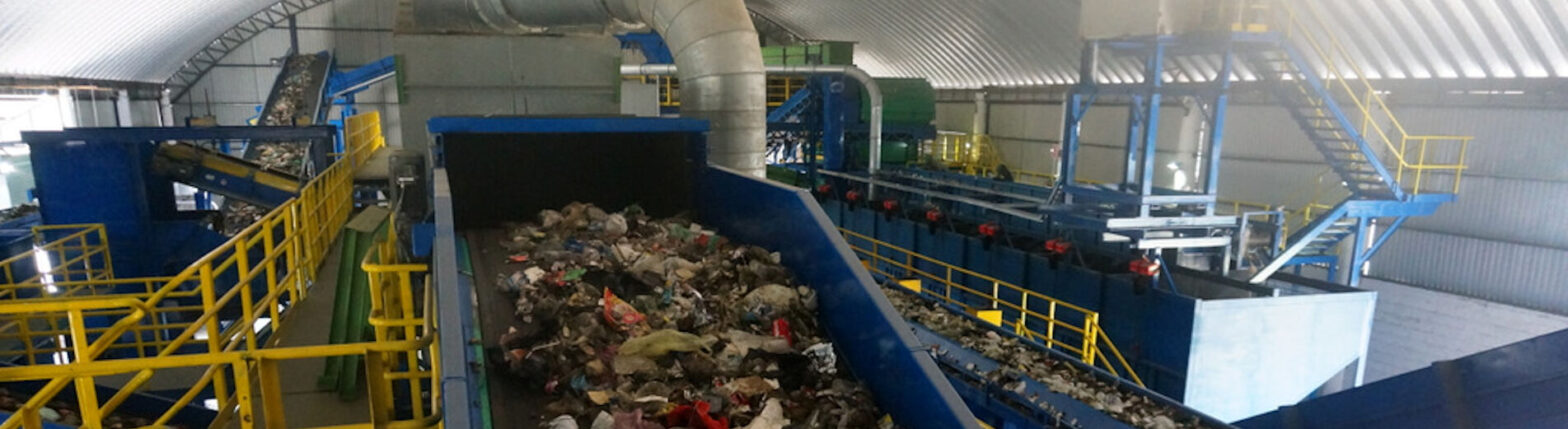
8.1 Material Recovery Facility (MRF)
Dry waste is sorted into plastic, paper, metal, and glass.
8.2 Composting (For Organic Waste)
Types:
- Windrow composting
- Vermicomposting
- In-vessel composting
Products: manure, soil conditioners.
8.3 Biomethanation
Anaerobic digestion converts organic waste into:
- Biogas (electricity, cooking fuel)
- Digestate (fertilizer)
8.4 Refuse-Derived Fuel (RDF)
Dry waste converted into fuel pellets for industries.
8.5 Recycling
Paper, metal, plastic and glass recovered for reuse.
9. Waste-to-Energy (WTE) Technologies
Generic process flow for WTE plants and incineration systems:
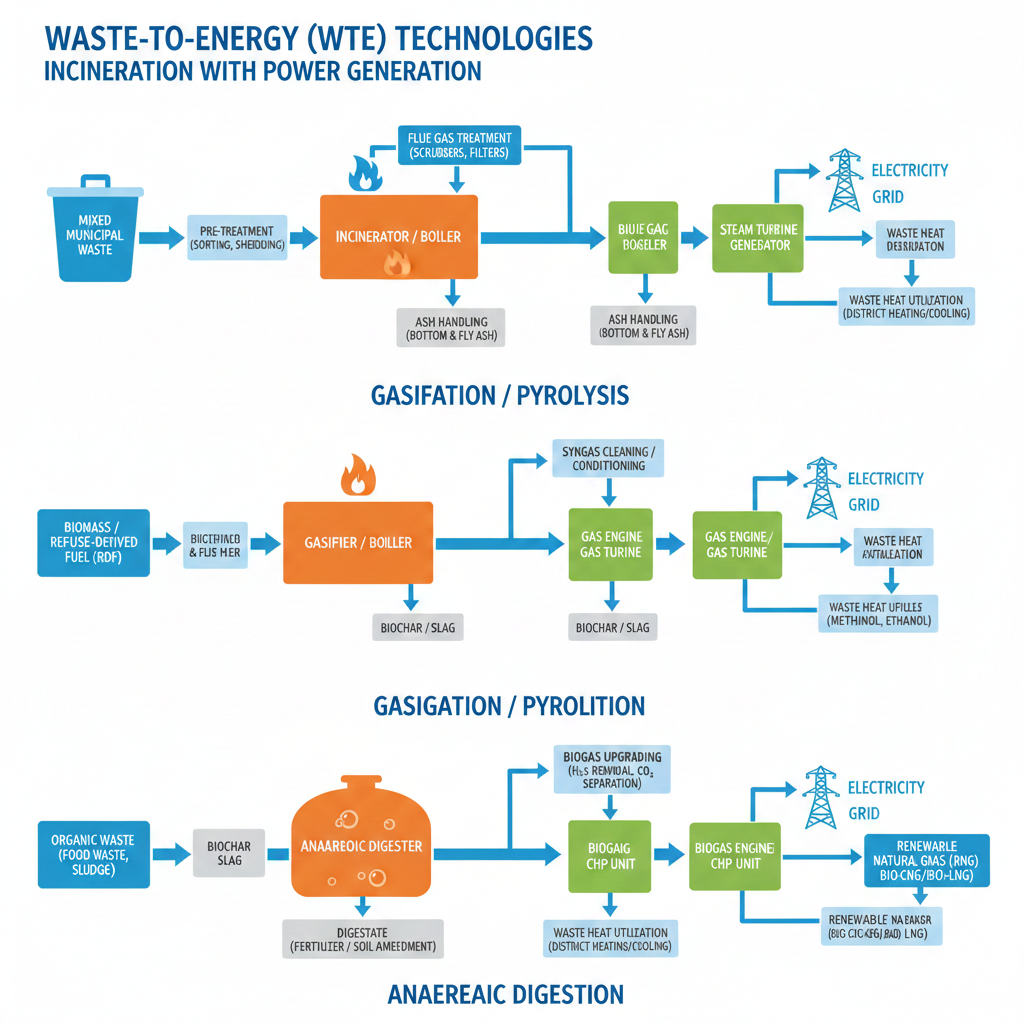
Methods:
- Incineration
- Gasification
- Pyrolysis
Outputs:
- Electricity
- Heat
- RDF
WTE reduces landfill dependence but requires proper emission controls.
10. Sanitary Landfills (Final Disposal)
Landfills are engineered sites designed to safely dispose of non-recyclable waste.

Components of a Sanitary Landfill:
- Liner system (HDPE + clay)
- Leachate collection drains
- Gas venting system
- Daily cover layer
- Monitoring wells
Functions:
- Prevent groundwater contamination
- Collect landfill gas (methane)
- Safely isolate waste from environment
11. Leachate Treatment
Leachate contains:
- Organic pollutants
- Heavy metals
- Pathogens
Treatment includes:
- Aeration
- Coagulation
- Activated sludge process
- RO membranes
- Evaporation
12. Landfill Gas Management
Landfills generate methane (CH₄) and carbon dioxide (CO₂).
Solutions:
- Gas collection wells
- Flaring
- Biogas energy recovery
13. Construction & Demolition (C&D) Waste Management
C&D waste includes concrete, bricks, steel, tiles, wood.
Processing:
- Crushing for recycled aggregate
- Screening
- Reuse in road subbase
- RCC block manufacturing
14. Indian Regulations for Solid Waste Management
Key rules:
Solid Waste Management Rules, 2016 (MoEF&CC)
Major provisions:
- Segregation at source mandatory
- Door-to-door collection
- Decentralized treatment
- Ban on indiscriminate dumping
- Rules for bulk waste generators
- Rules for e-waste & plastic waste
15. Role of Civil Engineers in MSW Management
Civil engineers are involved in:
- Planning MSW systems
- Designing MRF, compost, biomethanation plants
- Designing sanitary landfills
- Environmental impact assessments
- Waste auditing
- Routing optimization
- Supervising treatment processes
Conclusion
Effective solid waste management is essential for urban sustainability, public health and environmental protection. Civil engineers play a crucial role in designing waste collection systems, treatment plants, recycling facilities and landfills that minimize pollution and maximize resource recovery. With increasing urbanization and waste generation, modern MSW solutions—waste-to-energy, biomethanation, recycling and sustainable landfill practices—are critical for the future of India’s cities.
Recommended Resources
CPCB Solid Waste Management Rules
https://cpcb.nic.in
Swachh Bharat Mission Urban – Waste Management
https://swachhbharaturban.gov.in
EPA Waste Management Guide
https://www.epa.gov
UN Environment Waste Resources
https://www.unep.org